
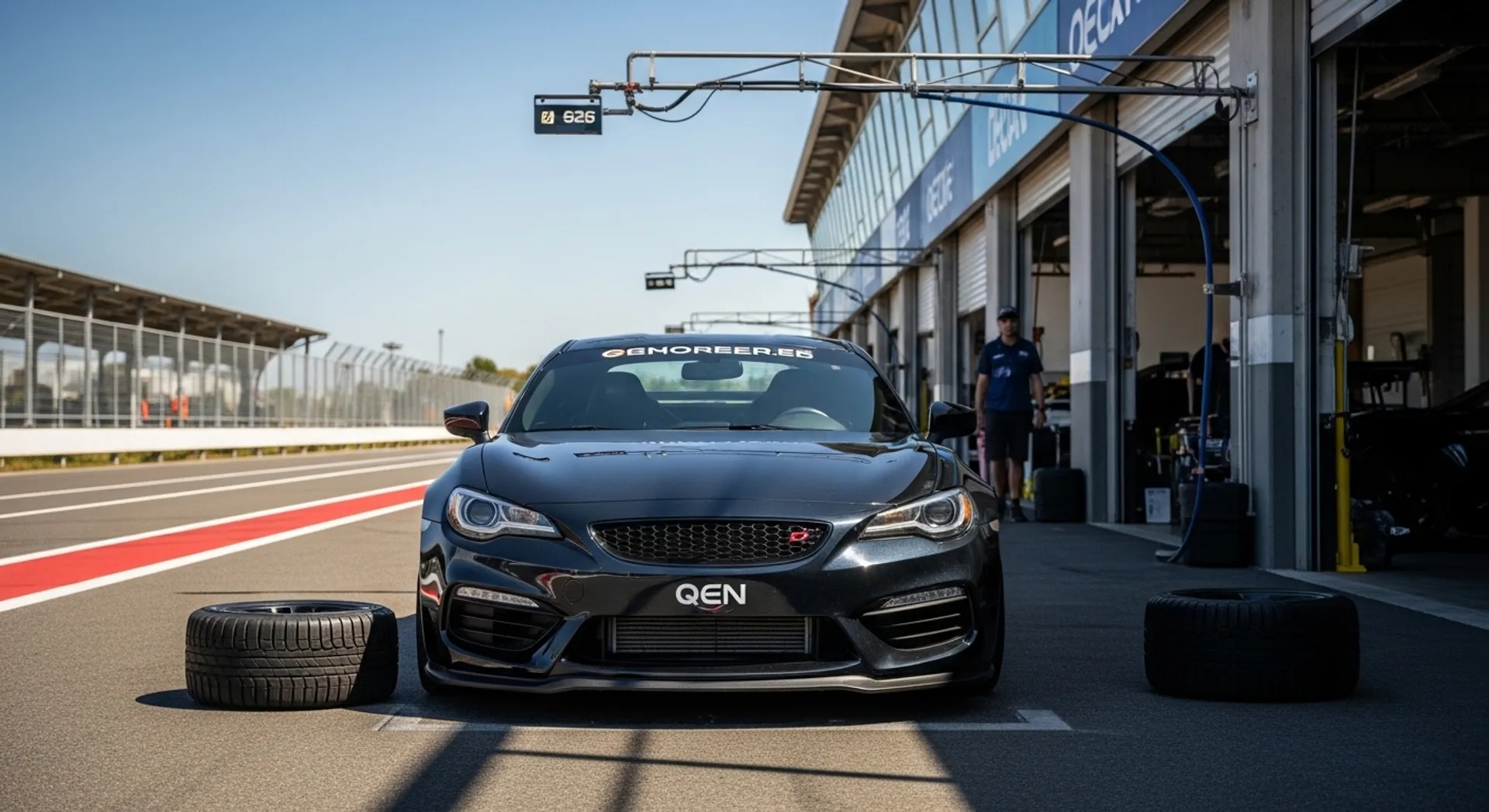
Track days are exploding in popularity because they’re the safest way to drive fast, learn car control, and enjoy your build without street risk. The problem is that the internet is full of upgrade advice that’s either wildly expensive, totally unnecessary, or flat-out wrong for beginners.
In 2026, the smartest trend is this: more manufacturers are offering OEM track-focused kits and factory-backed performance upgrades that bring real motorsport hardware to street cars—without turning your ride into an unreliable headache. A perfect example is BMW’s new M Performance Track Kit for the 2026 M2, featuring track aero and four-way adjustable dampers designed specifically for circuit use. That shift matters because it changes what “track-ready” can mean for normal drivers.
This guide breaks down the 2026 track day upgrades that actually move the needle: OEM track kits, tires, brakes, suspension basics, and the setup steps that save money and prevent frustration.
Why OEM track kits are trending in 2026
For years, track builds were mostly aftermarket territory. In 2026, brands are leaning into factory-developed parts that improve lap consistency and stability while staying street-legal. BMW’s M2 M Performance Track Kit is a headline example: it adds functional aero (including an adjustable rear wing) and chassis upgrades like motorsport-style adjustable dampers—while keeping the same engine output. That tells you where the focus is: grip, stability, and control, not just horsepower.
BMW’s kit includes an aero package and four-way adjustable dampers with support bearings—essentially a big step toward motorsport-grade chassis tuning for a road car. Orders are expected to open in Q3 2026. Source: Car and Driver
Translation: if you’re planning track days, the “best” upgrades are increasingly the ones that improve how the car puts power down, turns in, and stops—especially under heat and repeated laps.
Upgrade priority #1: Tires (the highest ROI mod on earth)
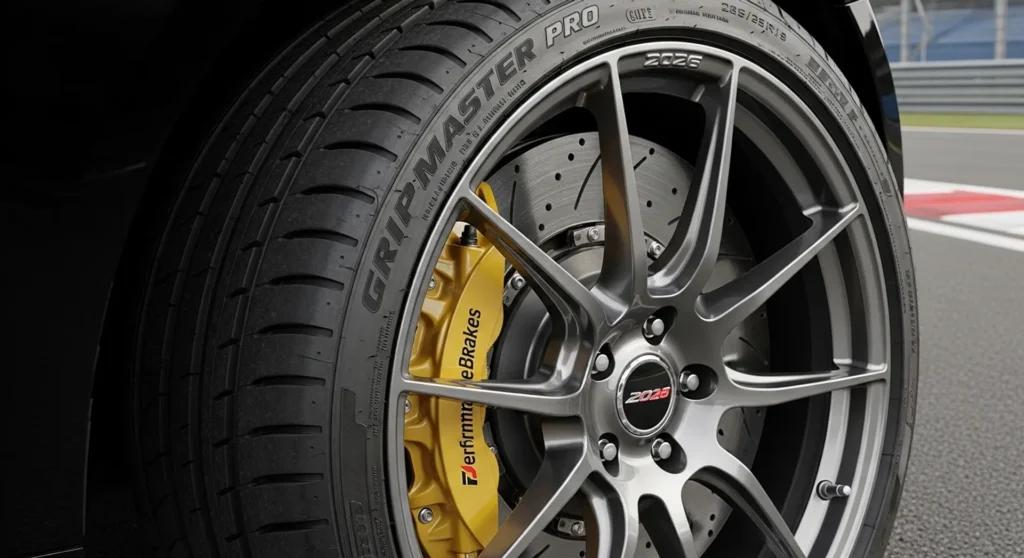
If you do one thing for track day performance, do tires. Not because it’s sexy—but because tires change every part of the car’s behavior: braking distances, turn-in, mid-corner grip, traction out of corners, and even the way the suspension feels.
Autosport Reviews already covered why this matters in detail—link it internally so readers who want deeper tire knowledge can keep moving through your site:
What tire upgrade actually means for track days
- More grip = later braking and higher corner speed
- Better heat resistance = more consistent laps (less “fall off”)
- More predictable breakaway = safer learning curve
Reality check: sticky tires also stress brakes and suspension more. So if you add grip, you need to be honest about the next bottleneck (usually brake fade).
Upgrade priority #2: Brakes (because speed is easy, stopping repeatedly isn’t)
Most track-day frustration comes from brakes—not power. The first sign is a long pedal, vibration, or the feeling that braking points keep moving earlier as sessions go on.
Smart brake upgrade ladder (don’t skip steps)
- Step 1: High-temp brake fluid + proper bleeding
- Step 2: Track-capable brake pads matched to your rotor type
- Step 3: Better cooling (ducting if available)
- Step 4: Rotors/calipers only if the earlier steps still fail
Most beginners waste money jumping straight to big brake kits when fluid + pads would have solved the issue for 30% of the cost.
Upgrade priority #3: Suspension and damping (control beats comfort on track)
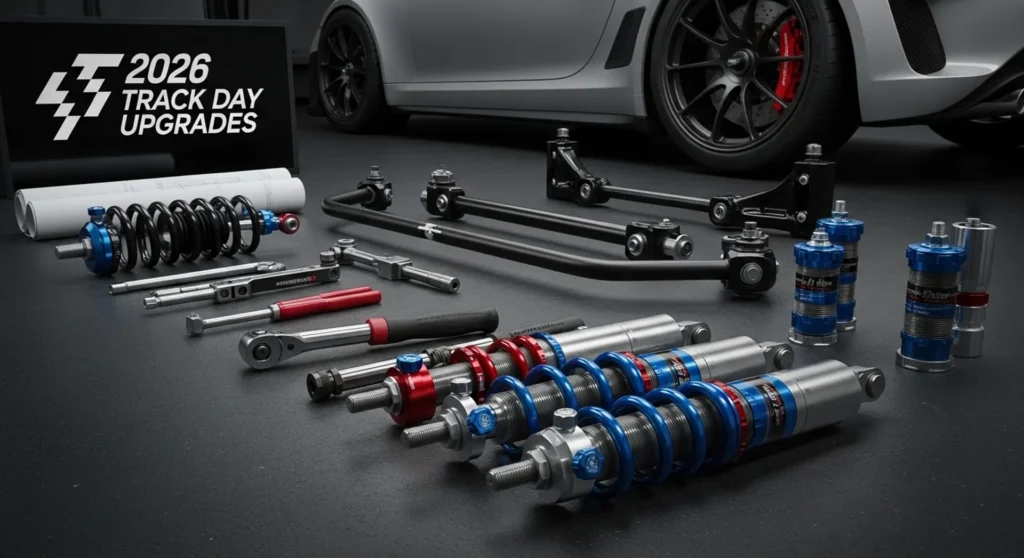
This is where 2026 OEM track kits are getting interesting. BMW’s M2 Track Kit includes four-way adjustable dampers, which is serious gear. But you don’t need a full motorsport damper setup to benefit from better control.
What suspension upgrades should do
- Keep the tire in contact with the surface over bumps and curbing
- Reduce excessive body roll that overloads the outside tire
- Improve stability under braking and acceleration
Beginner-friendly suspension moves
- Alignment (often the best “mod” per dollar)
- Quality dampers (matched to springs, not random combos)
- Upgraded sway bars only if you understand the handling trade-offs
If you’re learning, prioritize predictability over “stiff.” A stiff car can feel fast for one lap and scary for the next when the surface changes.
OEM track kits vs aftermarket: how to decide
OEM track kits are trending because they offer a cleaner path for drivers who want performance without endless trial-and-error. Here’s the straight comparison:
OEM track kit advantages
- Parts are engineered as a system (less mismatch risk)
- Often easier fitment and compatibility
- May retain more resale value and “factory-correct” feel
Aftermarket advantages
- More options at every budget level
- More aggressive setups available
- Better for niche goals (time attack, drift, specific classes)
For most track-day drivers, the best path is often hybrid: OEM or OEM-plus where it matters (dampers, aero, cooling), then aftermarket tires, pads, and alignment tuned to your style.
Don’t ignore the “unsexy” upgrades that protect your car
Track days are hard on fluids, heat management, and basic maintenance. If you skip these, you’ll spend your budget fixing problems instead of improving performance.
- Fresh engine oil (and don’t arrive on old oil)
- Coolant check and leak inspection
- Torque your wheels correctly before every session
- Inspect tires for uneven wear and heat cycles
If you want to keep readers in your ecosystem, this internal link is a logical “responsible ownership” bridge even though it’s not track-specific:
The simple track-day setup checklist (use this every time)
This is the checklist that prevents most beginner mistakes:
Before the event
- Check brake pad thickness and fluid condition
- Set tire pressures slightly below your normal street target (you’ll adjust after heat)
- Remove loose items from the cabin and trunk
- Confirm torque specs and bring a torque wrench if you can
At the track
- Warm the car up gradually (first laps are for heat, not heroics)
- Check tire pressures after each session
- Do a cooldown lap before coming in
- Let brakes cool—don’t park immediately with hot pads clamped hard
How to read performance upgrades like a pro
Marketing loves big numbers. Track performance is more about systems than single parts. If you want to avoid hype-driven mistakes, use your own internal guide on evaluating claims and reviews:
A strong rule: if an upgrade doesn’t improve grip, braking consistency, or thermal stability, it’s probably not your next track mod.
What to upgrade first based on your goal
If you’re brand new to track days
- Tires (or at least track-capable tires)
- Brake fluid + pads
- Alignment
If you already have 3–5 track days under your belt
- Better dampers (or OEM track kit components if available)
- Cooling upgrades
- Driver coaching (yes, it beats mods)
If you’re chasing lap times
- Data + consistency upgrades (tires, brakes, repeatable suspension settings)
- Aero that’s actually functional (not cosmetic)
- Weight reduction only after reliability is locked
Final thoughts
2026 track day upgrades are trending in a smarter direction. OEM track kits are bringing factory-engineered solutions into the mainstream, while experienced drivers keep repeating the same truth: the fastest cars are usually the ones with the best grip, the most consistent brakes, and the most predictable control—lap after lap.
Start with tires and brakes, get your alignment right, and only then step into dampers, aero, and track kits. That’s how you build speed without building problems.