
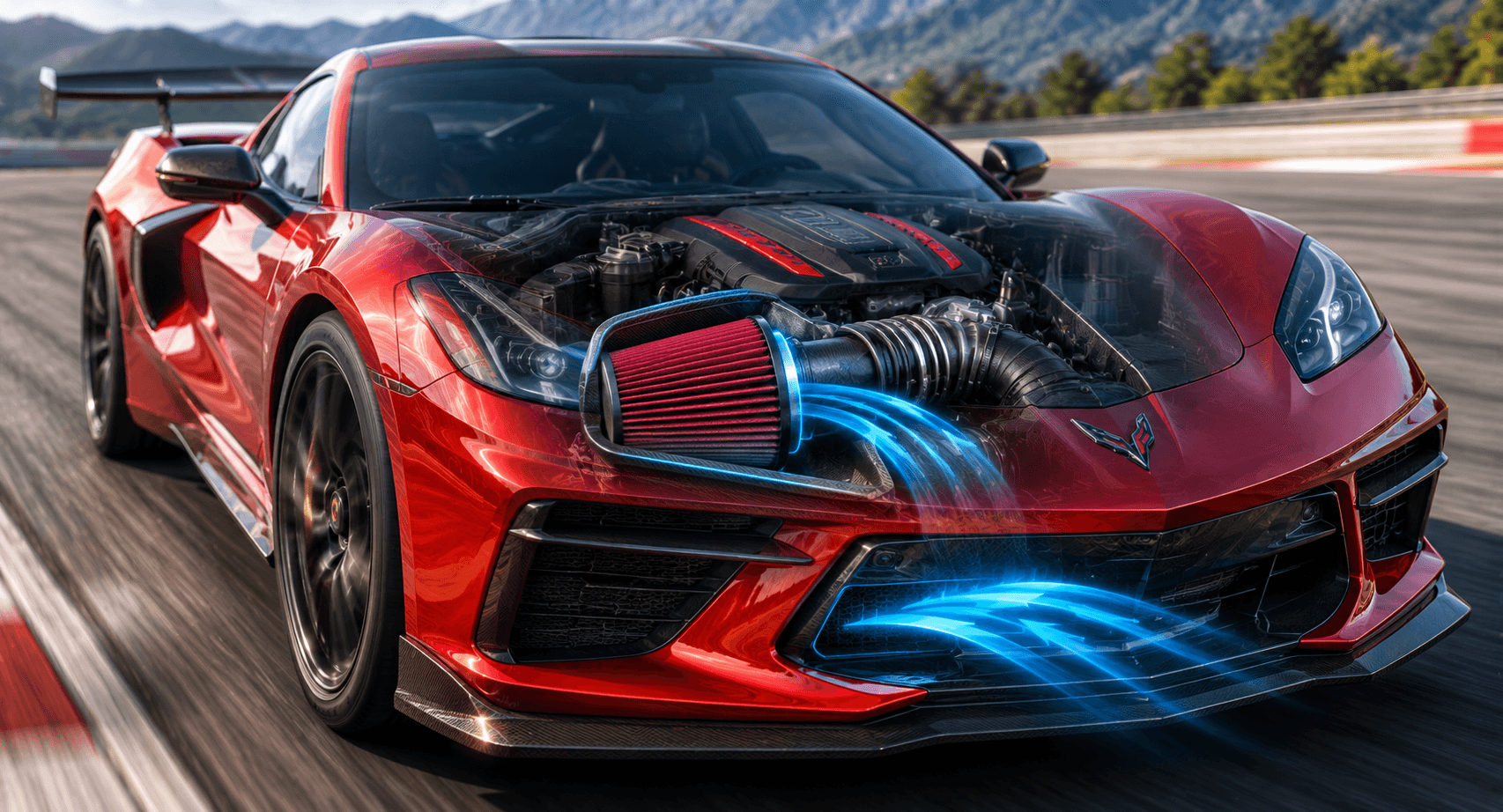
Engine performance depends on more than fuel and ignition. An internal-combustion engine also needs a steady supply of air to produce power. The amount, temperature, and quality of that air can influence how efficiently the engine operates, which is why the intake system is an important part of sports car engineering.
Performance air intake systems are designed to improve the way air travels from outside the vehicle into the engine. Depending on the design, an aftermarket intake can increase airflow, reduce restrictions, lower intake temperatures, or change the sound produced by the engine.
However, installing a larger intake does not automatically guarantee a major horsepower increase. The intake system needs to work with the engine, throttle body, air filter, sensors, exhaust system, and engine calibration. Understanding how these components interact can help sports car owners decide whether an intake upgrade makes sense for their vehicle.
What Is a Performance Air Intake?
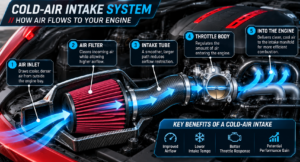 A performance air intake is a modified or replacement intake system designed to optimize the airflow entering an engine. The system can include an air filter, intake tube, airbox, inlet duct, resonator, and other components that direct air toward the throttle body.
Factory intake systems are engineered around several priorities. Manufacturers need to balance performance with noise, emissions, durability, packaging, cost, and everyday drivability. As a result, there may be opportunities to change the intake design without completely redesigning the engine.
Performance intake systems attempt to improve one or more characteristics of the factory design. Some focus on increasing airflow, while others emphasize cooler intake temperatures or improved throttle response.
Why Airflow Matters
An internal-combustion engine requires air for combustion. The engine draws air through the intake system before it enters the cylinders.
If the intake creates unnecessary restrictions, the engine may have to work harder to draw in the required air. A properly designed intake can reduce certain restrictions and provide a smoother path for airflow.
The actual benefit depends on the engine and the rest of the powertrain. A high-output turbocharged engine may respond differently to an intake modification than a naturally aspirated engine.
Cold Air Intake vs Short Ram Intake
Two common intake approaches are cold-air intake systems and short-ram intake systems. Both aim to improve airflow, but they use different approaches.
Cold Air Intakes
A cold-air intake is designed to draw air from an area outside the hotter engine compartment. The idea is to provide the engine with cooler incoming air.
Cooler air is denser than warmer air. Under appropriate conditions, this can allow more oxygen to enter the engine for a given volume of air.
The effectiveness of a cold-air intake depends heavily on its location and design. A poorly designed system can expose the intake to water, excessive heat, or airflow turbulence.
Short Ram Intakes
A short-ram intake generally uses a shorter and more direct intake path. This can reduce the length of the airflow route and may create a more noticeable intake sound.
However, the intake may draw air from a warmer area of the engine bay. This can reduce some of the potential temperature advantage of the system.
Choosing between these designs depends on the vehicle, climate, engine configuration, and intended use.
Why Intake Air Temperature Matters
Air temperature can have an important effect on engine performance. Cooler air is denser than warmer air, meaning a given volume can contain more oxygen molecules.
This is one reason manufacturers pay close attention to intake temperatures when developing performance engines.
For naturally aspirated engines, maintaining a supply of cool air can help support consistent performance. For turbocharged engines, intake temperature is also important because compressing air generates additional heat.
This makes intake design particularly relevant to modern forced-induction sports cars.
Our article on high-performance cooling systems explores the broader importance of managing heat in performance vehicles.
How Intake Design Affects Throttle Response
Throttle response describes how quickly the engine reacts when the driver presses the accelerator. Intake design can influence this response by changing airflow characteristics and the path between the airbox and throttle body.
The effect can vary significantly from one vehicle to another. Some drivers may notice a sharper response immediately after an intake upgrade, while others may notice little change in everyday driving.
On turbocharged vehicles, intake modifications can also change the sound and behavior associated with the turbocharger. The actual performance improvement depends on how well the intake works with the engine’s existing calibration.
This is why intake modifications are often considered alongside engine tuning.
Performance Air Filters
The air filter is an important part of any intake system. Its primary job is to prevent dust, dirt, and other contaminants from entering the engine.
Performance filters are designed to provide adequate filtration while allowing sufficient airflow. Some use different filter materials or larger surface areas to balance airflow and filtration.
However, filtration should not be sacrificed simply to gain airflow. An engine needs clean air, particularly when it is being operated under demanding conditions.
Reusable vs Disposable Filters
Some performance filters can be cleaned and reused, while others are designed to be replaced at service intervals.
Reusable filters can reduce the need for replacement filters over time, but they require proper cleaning and maintenance. Applying too much filter oil to certain designs can potentially interfere with airflow sensors.
Drivers should always follow the manufacturer’s maintenance instructions for the specific filter being used.
How Intake Systems Affect Engine Sound
One of the most noticeable changes after installing a performance intake may be the sound rather than the horsepower.
Factory intake systems often contain resonators and chambers designed to reduce unwanted noise. Performance intake systems may use different shapes and materials that allow more of the engine’s induction sound to reach the driver.
Turbocharged engines may produce more noticeable intake and compressor sounds, while naturally aspirated engines can develop a louder induction note as engine speed increases.
For many sports car enthusiasts, this additional sound contributes to the driving experience.
Does a Bigger Intake Always Produce More Power?
No. Bigger is not automatically better when it comes to intake systems.
An intake tube that is significantly larger than the engine’s requirements can change airflow velocity and may not provide the expected improvement. The design needs to balance airflow volume, velocity, pressure, temperature, and sensor accuracy.
The throttle body and intake manifold also place limits on how much air the engine can use. Increasing the size of one component does not necessarily improve the entire airflow system.
A properly engineered intake should therefore be matched to the engine rather than selected solely because it has a larger diameter.
Intake Systems and Turbocharged Engines
Turbocharged sports cars can benefit from carefully designed intake systems because the turbocharger depends on a consistent supply of air.
The intake feeds air toward the compressor side of the turbocharger. Any restrictions or poorly designed sections can influence how efficiently the system moves air.
Turbocharged engines also generate significant heat, making the location and insulation of the intake important.
When combined with appropriate software calibration, a well-designed intake can become part of a broader performance strategy.
Intake Systems and Engine Tuning
Modern engines use sensors to monitor airflow and engine operating conditions. Depending on the vehicle, changing the intake system can alter the airflow characteristics measured by these sensors.
Some vehicles can automatically adapt to moderate changes, while others may benefit from software calibration after significant intake modifications.
This is why drivers should consider the intake and engine calibration as a complete system rather than treating them as completely independent upgrades.
Our existing article on engine tuning and sports car performance provides additional information about how software adjustments can influence engine behavior.
Intake Heat and Heat Soak
Heat soak occurs when components around the intake become hot after prolonged operation. This can be particularly noticeable in traffic, during hot weather, or after repeated high-load driving.
A poorly positioned intake can draw air from an area that becomes extremely hot. Even if the system provides good airflow, high intake temperatures can reduce some of the potential performance advantage.
Cold-air systems attempt to address this by isolating the intake from engine-bay heat and drawing air from a cooler location.
Performance Intakes for Track-Day Cars
Track driving creates different demands from normal street driving. Engines spend longer periods operating at high loads, temperatures increase, and consistent performance becomes more important.
An intake system used on a track car should therefore be evaluated for temperature management, filtration, durability, and resistance to heat.
Water exposure is another consideration. An intake positioned low in the vehicle may have a greater risk of drawing water during heavy rain or through standing water.
Drivers preparing a vehicle for circuit use should evaluate the complete package rather than choosing an intake based solely on advertised horsepower.
For additional preparation advice, see our guide to 2026 track-day upgrades.
Common Performance Intake Mistakes
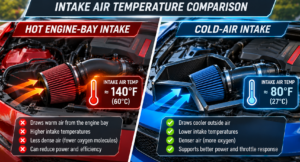 One common mistake is installing an intake without considering where it draws air from. A system that sits directly beside a hot engine component may not provide the temperature benefits the driver expects.
Another mistake is choosing a filter based only on airflow claims. Filtration quality remains important for engine protection.
Drivers should also be careful with sensor placement. Changing the intake tube or sensor housing can affect the accuracy of airflow measurements on certain engines.
Finally, expectations should remain realistic. An intake alone is unlikely to transform a completely stock sports car into a dramatically faster vehicle.
How an Intake Works With an Exhaust Upgrade
The intake and exhaust systems are both involved in the engine’s airflow process. The intake supplies air to the engine, while the exhaust carries combustion gases away.
For this reason, some enthusiasts choose to modify both systems as part of a broader engine-performance strategy.
Our guide on performance exhaust systems explains how exhaust design can influence airflow, sound, weight, and engine behavior.
However, intake and exhaust upgrades should be matched to the engine rather than selected independently based only on maximum advertised flow.
Are Performance Air Intakes Worth It?
For some sports car owners, a performance intake can be a worthwhile modification. The potential benefits include improved airflow, cooler intake temperatures, sharper throttle response, reduced weight, and a more engaging engine sound.
The actual result depends on the specific vehicle and intake design. A well-engineered system can complement other modifications, while a poorly designed intake may provide little measurable improvement.
Drivers should therefore consider the entire engine system, including the air filter, intake path, sensors, throttle body, engine calibration, and exhaust.
What Should Buyers Look For?
When choosing a performance intake, buyers should consider construction quality, heat shielding, filter design, intake location, sensor compatibility, maintenance requirements, and fitment.
It is also important to determine whether the system is designed for street use, track use, or both.
Drivers in areas with frequent rain should pay particular attention to the intake’s location and water protection.
For more guidance when evaluating performance vehicles and factory options, visit the Car Buying Advice section of AutosportReviews.
Final Thoughts
A performance air intake can be a relatively simple way to change the character of a sports car. By improving airflow and managing intake temperatures, a properly designed system can complement the engine and other performance components.
The biggest mistake is expecting every intake to produce dramatic horsepower gains. Engine performance depends on the entire airflow and powertrain system, and the effectiveness of an intake varies between vehicles.
For enthusiasts, the real value of a good intake can come from a combination of improvements: cleaner airflow, better temperature management, sharper response, reduced weight, and a more engaging induction sound.
When matched with appropriate engine tuning, exhaust modifications, cooling systems, tires, and other upgrades, an intake can become part of a balanced performance package.
As sports car manufacturers continue to extract more performance from smaller and more efficient engines, airflow management will remain an important part of automotive engineering. Understanding how air reaches the engine can help enthusiasts make smarter decisions about modifications and get more out of the performance cars they enjoy.