

A limited slip differential is one of the most important performance features in a sports car, yet many drivers do not think about it until traction becomes a problem. Engines, brakes, tires, and suspension often get more attention, but the differential plays a major role in how power reaches the road. For drivers who care about cornering, acceleration, and control, this component can make a noticeable difference.
In simple terms, a limited slip differential helps both drive wheels work together more effectively. This can improve traction, corner exit speed, stability, and driver confidence. For performance driving, especially in rear-wheel-drive and all-wheel-drive cars, a well-matched limited slip differential can make the car feel more planted and responsive.
What Is A Limited Slip Differential?
A differential allows the left and right wheels on the same axle to rotate at different speeds. This matters during cornering because the outside wheel travels farther than the inside wheel. Without a differential, the tires would drag, skip, or lose grip during turns.
A standard open differential works well for normal driving, but it has one major weakness. When one drive wheel loses grip, power often goes to the wheel with the least traction. This can cause wheelspin and weaker acceleration. A limited slip differential, often called an LSD, helps reduce that problem by limiting the speed difference between the two drive wheels.
For a clear technical explanation, Motor1 explains limited slip differentials and their role in performance driving.
Why LSDs Matter During Corner Exit
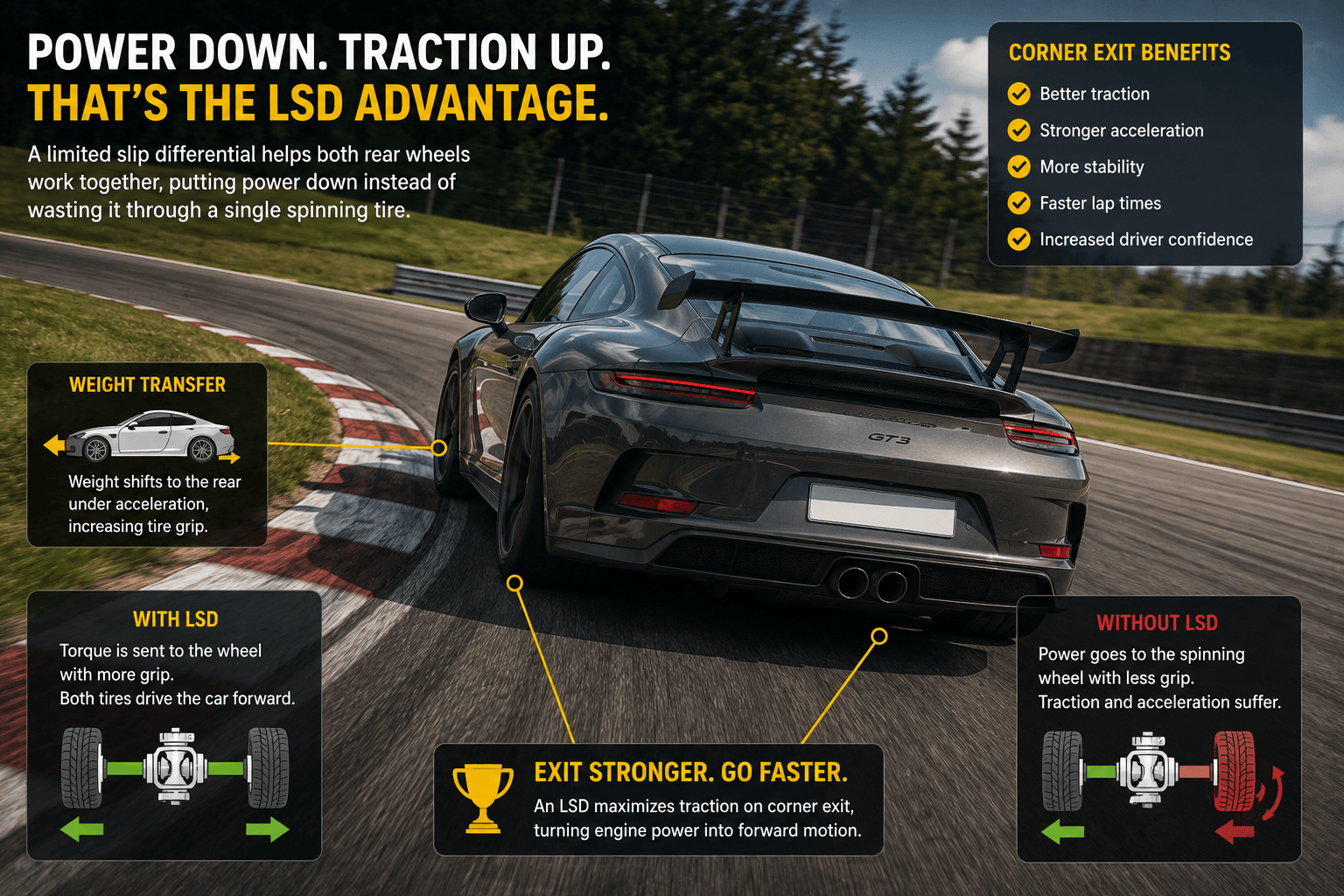
Corner exit is where a limited slip differential becomes especially useful. When a sports car accelerates out of a turn, weight shifts across the chassis. One tire may have more grip than the other. With an open differential, the inside tire can spin before the car puts down full power.
A limited slip differential helps both drive wheels contribute more effectively. This can make acceleration out of corners smoother and stronger. On a track, better corner exit can improve lap times. On the street, it can make the car feel more controlled when accelerating through curves.
For more performance-focused driving topics, visit the Car Buying Advice section.
Open Differential vs Limited Slip Differential
The difference between an open differential and a limited slip differential becomes clear when grip is uneven. An open differential allows the wheels to rotate freely at different speeds. This makes normal turning smooth, but it can send too much power to the wheel with less traction.
A limited slip differential still allows wheel speed differences during cornering, but it reduces excessive slip. When one wheel begins to lose traction, the system helps direct more usable torque to the tire with better grip. This can improve acceleration, balance, and overall driving feel.
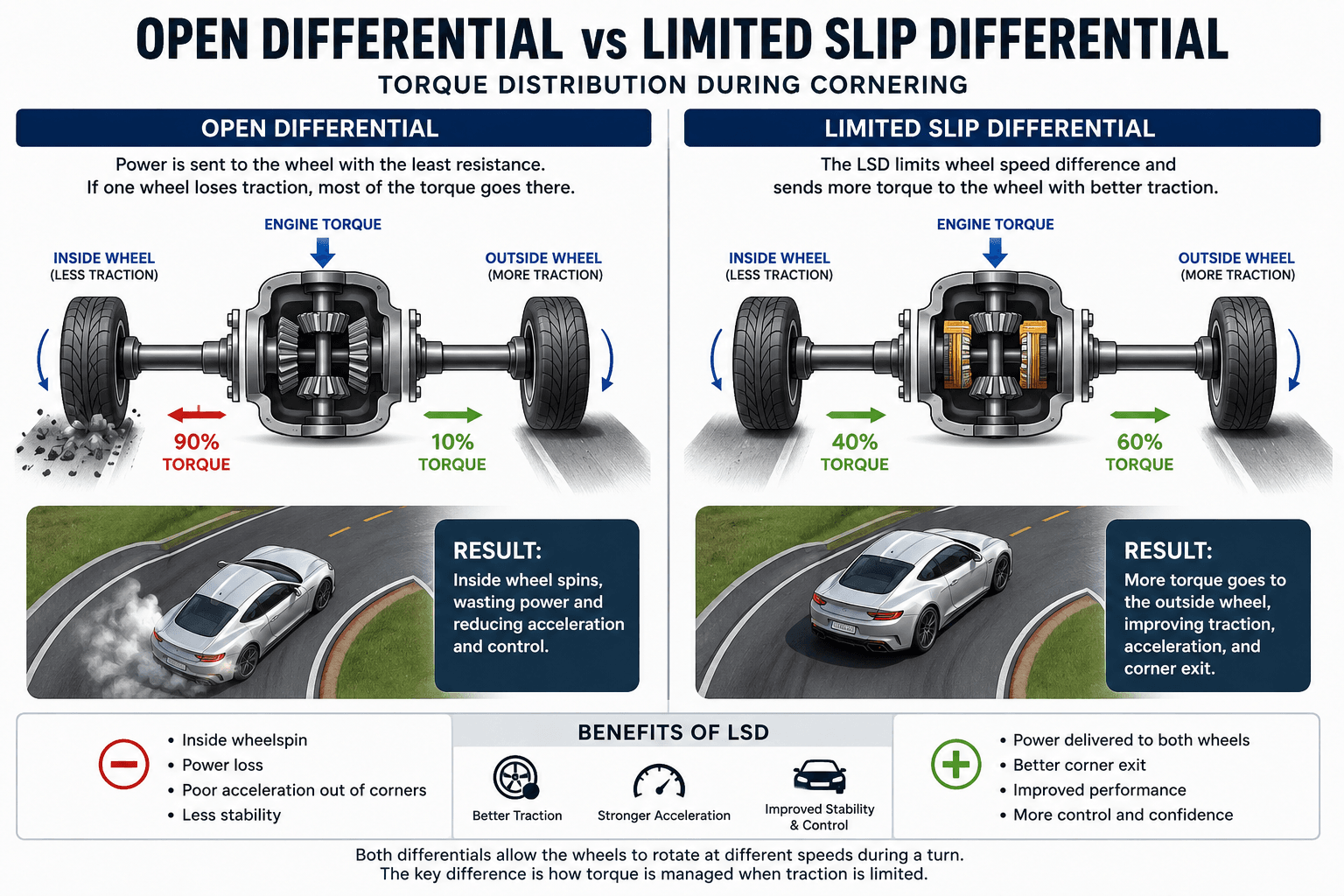
Open Differential
An open differential is simple, smooth, and common in many vehicles. It works well for everyday driving and low-stress conditions. However, it may struggle during hard acceleration, uneven surfaces, wet roads, or aggressive cornering.
Limited Slip Differential
A limited slip differential is designed for better traction under load. It helps reduce wasted power and gives the driver more control when accelerating. This is why many sports cars, track cars, and performance trims include LSD systems as standard or optional equipment.
Types Of Limited Slip Differentials
Not all LSD systems work the same way. Different designs suit different vehicles and driving styles. The right choice depends on how the car is used, whether for daily driving, weekend canyon roads, autocross, or track days.
Clutch Type LSD
A clutch type LSD uses friction plates to limit wheel speed differences. This design is common in motorsport and performance builds because it can provide strong lockup and sharp response. It can feel aggressive, especially during hard driving.
The downside is that clutch type units may require more maintenance. They may also create more noise or harshness during low-speed driving. For serious track use, however, they remain a popular choice.
Helical LSD
A helical LSD uses gears instead of clutch plates. It is usually smoother and quieter than a clutch type system. This makes it a good option for street performance cars that need better traction without sacrificing daily comfort.
Helical units are often low maintenance and predictable. However, they may be less effective when one wheel has very little load or grip.
Electronic LSD
An electronic limited slip differential uses sensors, software, and clutch control to adjust torque distribution. These systems are common in modern performance cars because they can react quickly to changing road conditions.
Electronic LSD systems can work with drive modes, stability control, and traction systems. This makes them useful in cars that need both daily comfort and strong performance capability.
How An LSD Improves Sports Car Handling
A limited slip differential affects more than straight-line traction. It can change how a sports car behaves during cornering, throttle input, and quick direction changes. When tuned properly, it can help a car rotate more predictably through corners.
During aggressive driving, the LSD helps reduce inside wheelspin. This allows the driver to apply throttle earlier after the apex of a turn. The result is stronger acceleration and a more connected feeling between the throttle pedal and the rear tires.
For more related performance upgrades, read our article on 2026 Track-Day Upgrades That Actually Work.
Why Tires Still Matter
A limited slip differential cannot replace good tires. The LSD helps manage torque, but tires still create the grip. If the tires are worn, cold, or not suited for the driving conditions, traction may still be limited.
This is why drivetrain upgrades work best when paired with proper tires, suspension setup, and alignment. A sports car with a strong LSD but poor tires may still struggle to put power down cleanly.
You can connect this topic with your existing guide on how performance tires impact handling, speed, and driving experience.
Is An LSD Worth It For Daily Driving?
For many drivers, the answer depends on the car and driving style. A limited slip differential may not feel dramatic during calm city driving. However, it becomes more noticeable during hard acceleration, wet-road driving, and spirited cornering.
Daily drivers may prefer a smooth helical or electronic LSD because these designs tend to feel refined. Track-focused drivers may prefer a clutch type LSD because it can offer stronger lockup and more aggressive behavior.
Common Mistakes When Choosing An LSD
One common mistake is choosing the most aggressive setup without considering how the car is used. A track-focused differential may feel noisy or harsh during normal driving. Another mistake is ignoring supporting upgrades. Tires, suspension, and alignment all affect how well the LSD performs.
Drivers should also consider maintenance. Some LSD types need specific fluids or service intervals. Skipping maintenance can reduce performance and create drivability issues over time.
For more background on differential systems, check this guide from Hagerty.
Final Thoughts
A limited slip differential can make a sports car feel more planted, responsive, and controlled. It helps manage power delivery, improves traction, and supports stronger corner exit performance. While it may not be as visible as a body kit or as loud as an exhaust, it can have a major impact on the way a car drives.
For enthusiasts who care about handling and real-world performance, the LSD is one of the most meaningful drivetrain upgrades or factory options to consider. When paired with the right tires, suspension, and driving setup, it can help a sports car feel sharper, more balanced, and more rewarding behind the wheel.